The Martech Madness
I recently came across an interesting infographic showing different technology solutions assigned to specific areas of marketing. It was created by Scott Brinker, who runs one of the better-known blogs focused on marketing technology.
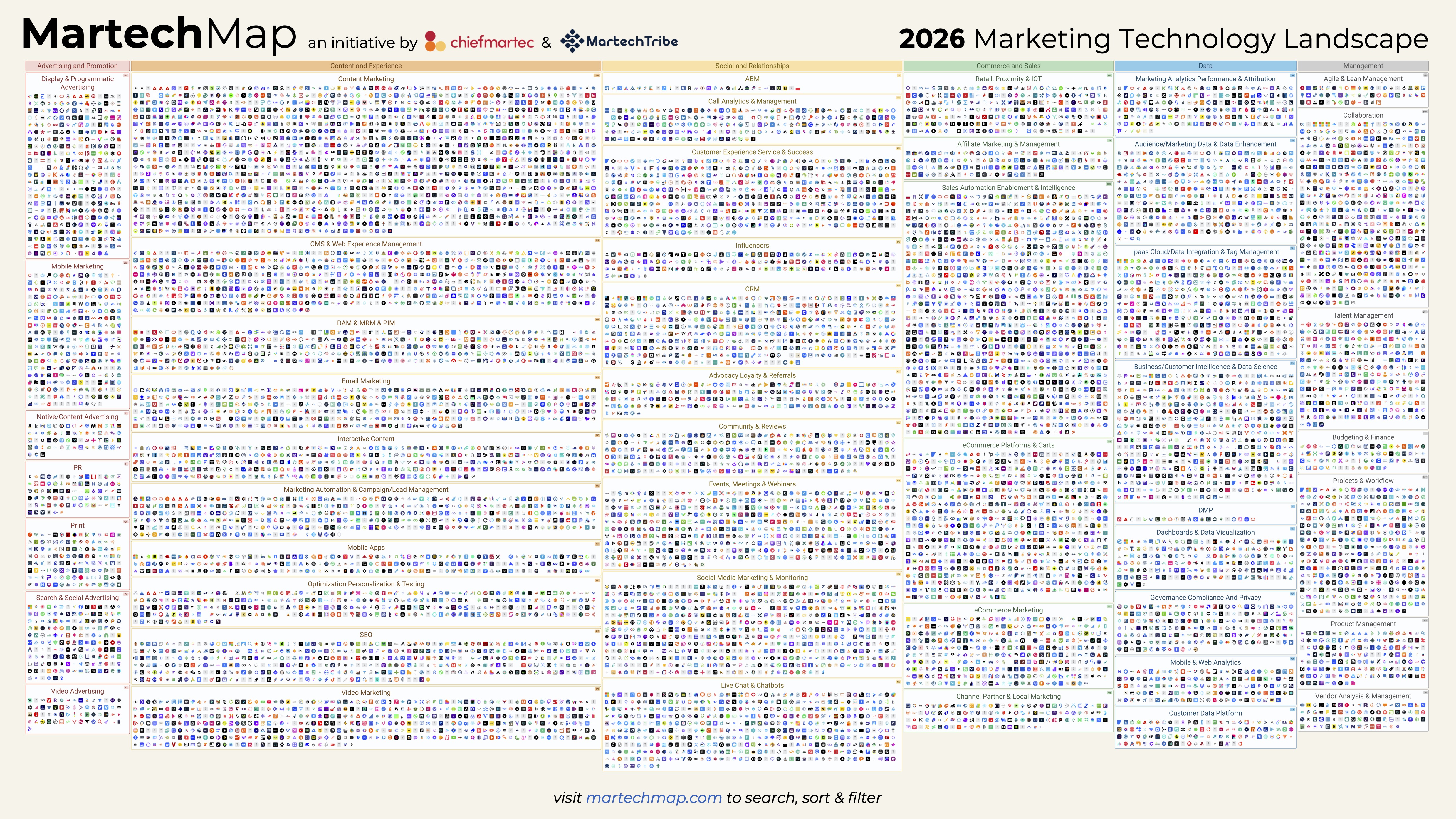
My first thought was how quickly the number of technology solutions available to marketing teams is growing every year. And the pace is quite impressive.
Having worked for a company developing business software, I have had the opportunity to work with products from the wider IT market. This immediately brought to mind a comparison between marketing technology and ERP solutions, where the market is also developing rapidly.
There is, however, one important difference.
With ERP systems, the software often influences the way internal processes are designed and organised within a company. Marketing tools work in the opposite direction. They need to be flexible enough to adapt to changing customer expectations and business requirements. At the same time, they must support the metrics and KPIs that marketing teams use in their daily work.
Following this comparison, we can look at marketing automation platforms in a similar way to a good ERP system.
In the past, marketing automation tools mainly supported basic purchasing and communication processes. Today, many of them cover much broader areas, including e-commerce and customer experience. They also need to keep up with changes in legislation.
GDPR is a good example. It has influenced many marketing technology solutions, including marketing automation platforms, as well as enterprise software such as ERP systems.
This brings me to another question: which technologies should a marketing department actually choose, and what criteria should be used to make that decision?
The answer is no longer based only on the functionalities required by the marketing team or the costs of maintaining and developing a particular system.
There are more and more external factors to consider — issues that may not be directly related to marketing, but can have a significant impact on the way the entire company operates. These include business performance, legal requirements and, increasingly, cybersecurity.
It is difficult to find one clear answer to this question, and I believe it is a challenge for many marketers.
Coming back to the infographic that inspired this post, my advice would be simple: before making any important business decision related to marketing technology, take the time to properly explore the market and understand the available options.